Flesh and Blood at the Felt: How Live Dealer Games Mess With Your Head (In Ways Slots Never Could)
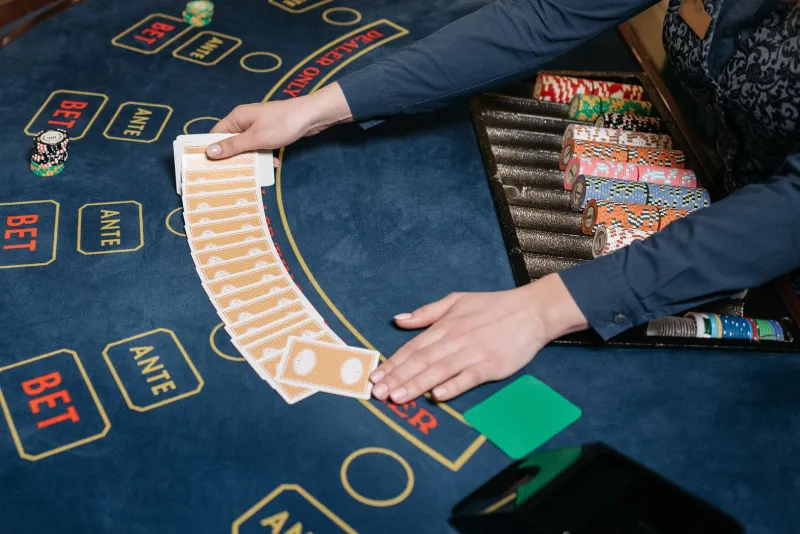
Picture your favorite candy store. Slots are the self-serve bins — grab a scoop, go as fast or slow as you want, nobody's watching, and the gummy bears don't care if you take all night. Live dealer games are something else entirely. They're the counter at an old-fashioned candy shop, where an actual person is standing across from you, bag open, making polite eye contact. Suddenly you feel a little more observed. A little more accountable. And somehow, inexplicably, a little more willing to buy one more bag than you planned.
That shift — from algorithm to human — is the whole ballgame when it comes to understanding why live dealer tables feel so fundamentally different from RNG-powered slots. And whether that difference is working for you or quietly picking your pocket deserves a real, honest look.
What Even Is a Live Dealer Game?
For any US players who haven't wandered into this corner of the casino yet: live dealer games stream a real croupier — blackjack, roulette, baccarat, and game show-style titles are the big ones — directly to your screen in real time. You place bets through a digital interface, but the cards are real, the wheel is real, and the dealer is a living, breathing person with opinions about their Wednesday night shift.
This is not an RNG (Random Number Generator) game. RNG slots and table games run on software that produces instant, statistically fair outcomes with zero human involvement. Nobody deals you a card. Nobody spins a wheel. A computer does the math and shows you a result in about half a second.
Those are two wildly different experiences, and your brain processes them very differently.
The Pace Problem: Slower Isn't Always Safer
Here's the counterintuitive part. You'd think a slower game would be easier on your bankroll. And in terms of raw spins-per-hour, you'd be right — a live blackjack table might run 40 to 60 hands per hour, while a video slot can chew through 400 to 600 spins in the same window. Fewer decisions, less exposure, right?
Not so fast.
The slower pace of live dealer games does two sneaky things. First, it gives your brain time to think — and your brain, left unsupervised, is a terrible financial advisor. In that pause between hands, it starts constructing narratives. The dealer has been cold for three rounds. She's due for a bust. That's the gambler's fallacy, gift-wrapped in a slow moment.
Second, the social rhythm of a live game makes sessions feel shorter than they are. You're chatting (or at least reading the chat), watching the dealer's hands, waiting on other players at the table. Time compresses. An hour feels like twenty minutes. That's not a conspiracy — it's just how human social engagement works. We evolved to track other people, and when we're doing it, our internal clocks go haywire.
The Human Element: Comfort or Compulsion?
There's genuine value in the social layer of live dealer games. For a lot of US players who grew up playing cards around a kitchen table, the presence of a real dealer scratches a very specific itch that a slot machine simply cannot. It feels legitimate. It feels like the casino floor experience without the $18 airport-priced cocktail.
That comfort is real, and it's not a bad thing by default. But comfort has a cost if you're not watching for it.
Human dealers — through zero fault of their own — create social pressure dynamics that RNG games don't. Tipping culture exists in live dealer environments. The chat box creates a sense of community. Some players feel awkward leaving mid-shoe at a blackjack table, even though the software absolutely does not care if you bail between rounds. These are small frictions, but small frictions add up. They keep you at the table a few hands longer than your pre-set limit intended.
Where Live Games Actually Win
To be fair to the live dealer format — and we are always fair here at Big Candy Casino — there are genuine reasons why this style of play can be better for certain players' discipline.
The slower pace means you have more time to actually think about strategy. Basic blackjack strategy, for instance, is way easier to apply when you have a few seconds to consider your hand rather than a frantic slot spin. If you've done your homework (and we've got a beginner's blackjack guide right here on the site), live blackjack gives you breathing room to actually use it.
The transparency is also a real advantage. Watching a physical card get flipped or a real roulette ball drop satisfies something in the skeptical American casino brain that RNG software never quite does. You saw it happen. That trust factor matters to a lot of players, and it's completely legitimate.
Practical Tips for US Players Choosing Between Formats
Set a session timer before you start. This applies to both formats, but it's especially critical for live games, where the social compression effect will eat your clock. Use your phone. Be ruthless about it.
Treat live dealer chat like a buffet, not a bar. The social element is fun, but the moment you're staying at a table primarily because you like the vibe, you've crossed from gaming into socializing — and socializing is an expensive reason to keep betting.
Know your minimum bet math. Live dealer tables generally carry higher minimum bets than RNG games. A $5 minimum live blackjack table with 50 hands per hour is $250 in action per hour at minimum — that's not pocket change. Map it out before you sit down.
Use live games for strategy practice, slots for entertainment sprints. If you're actively working on blackjack or baccarat strategy, live dealer is the better classroom. If you want a fast, visually stimulating burst of entertainment with a capped budget, RNG slots are more controllable.
Pick your format based on your mood, not your confidence. Feeling social and sharp? Live dealer. Feeling impulsive or emotionally rattled? Step away from the live tables entirely. Human interaction when you're not in the right headspace is a budget leak waiting to happen.
The Verdict from the Candy Counter
Live dealer games aren't better or worse than RNG slots — they're a different candy entirely. One's a slow-burn hard candy you sit with for a while; the other's a rapid-fire bag of gummies you can portion out or absolutely demolish in ten minutes depending on your self-control.
The psychological and mechanical differences are real, they're meaningful, and they require genuinely different strategies. The human element is a feature, not a bug — but like most features in a casino environment, it comes with fine print. Read it before you sit down at the felt.