You're Not Playing a Game — You're Playing a Slot Machine Built for Your Inner Eight-Year-Old
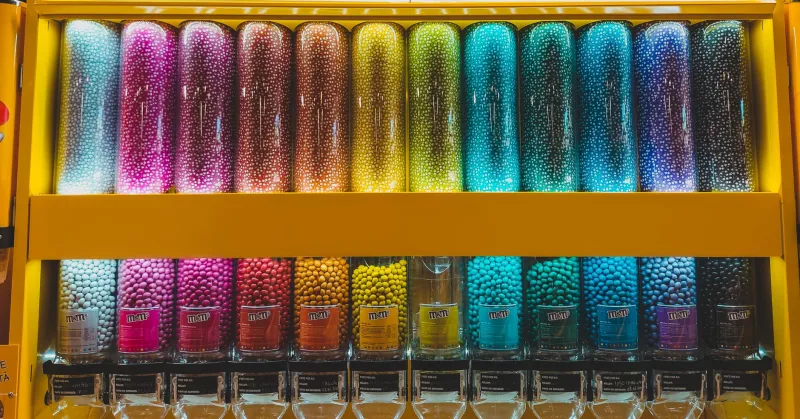
Remember being seven years old, standing in the candy aisle at a Walgreens, absolutely certain that your entire future happiness depended on getting that bag of Skittles? Your parents said no. You heard white noise. Rational thought had left the building.
Casino game designers remember that kid too. In fact, they've built their entire careers around keeping that kid alive inside your adult skull — and making sure he has a debit card.
This isn't conspiracy theorizing. The field of behavioral game design is well-documented, well-funded, and pointed directly at the same neurological reward circuits that made you throw a grocery store tantrum over gummy bears. Understanding how the machinery works is the first step toward not being eaten by it.
The Candy Store Blueprint, Digitized
Walk into a candy store as a kid and your brain gets ambushed from every direction simultaneously. Bright colors signal reward. Sweet smells prime anticipation. The sheer variety creates a kind of pleasurable overwhelm that bypasses the prefrontal cortex — the part of your brain responsible for decisions like "I already have candy at home" or "money is finite."
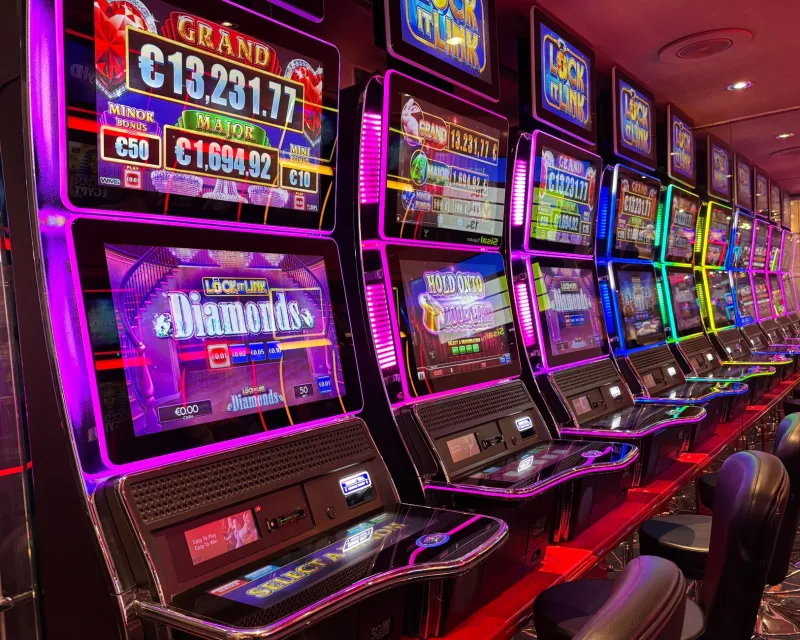
Now open a modern video slot. Saturated colors? Check. An audio landscape specifically engineered to feel exciting without becoming annoying? Check. A dizzying menu of games, themes, and bonus features designed to trigger that same delicious paralysis of choice? Absolutely, emphatically check.
Game studios don't pick neon color palettes because their art directors have bad taste. They pick them because neon activates the same visual cortex responses associated with novelty and reward. The candy store wasn't an accident of aesthetics either. It was a sales environment. So is your casino lobby.
Variable Rewards: The Jawbreaker That Never Ends
Here's the mechanism that does the heaviest lifting: variable ratio reinforcement. It's a behavioral psychology term, but the concept is simple. When a reward comes at unpredictable intervals — sometimes after two pulls, sometimes after two hundred — the brain doesn't learn to expect it and relax. It learns to obsess over it.
This is why a kid who gets a piece of candy every single time they ask eventually stops caring that much. Predictable rewards lose their punch. But a kid who sometimes gets candy, sometimes doesn't, with no discernible pattern? That kid will ask approximately ten thousand times without stopping, because the brain reads each "no" as a near-miss rather than a final answer.
Slots are built on this exact architecture. The near-miss — two matching symbols and one agonizingly close third — isn't a coincidence. It's a deliberate feature. Your brain processes a near-miss as almost-winning rather than losing, which fires off nearly the same dopamine response as an actual win. You feel like you're getting warm. You keep going.
Game developers know this. The math is in the RNG programming. The feeling is manufactured.
Sounds Like a Win, Even When It Isn't
Here's a fun experiment. Mute your slot game the next time you play. Notice how differently you feel about small wins — the ones that pay out less than your original bet. With sound on, those tiny returns come with celebratory jingles, coin cascade effects, and flashing animations that your brain categorizes as victory. Muted, they register closer to what they actually are: a net loss dressed in a party hat.
Audio design in casino games is not background decoration. It's functional manipulation. Researchers have found that casino-style soundscapes increase the speed at which players make decisions and inflate their perception of how frequently they're winning. The candy store equivalent is that specific crinkle of a wrapper — a sound so thoroughly associated with sugar reward that it triggers anticipation before a single piece hits your tongue.
Game studios hire sound designers specifically to exploit this. You deserve to know that.
The Bonus Feature Trap (Or: The Toy in the Happy Meal)
Free spins. Multipliers. Pick-a-prize bonus rounds. These features serve a genuine entertainment function, sure. But they also serve a psychological one: they dramatically extend play sessions by giving players a sense of agency and progress that the base game doesn't always provide.
The bonus round is the toy in the Happy Meal. It's not why you came in. But once you know it exists, leaving before you trigger it feels like leaving money on the table — even when, statistically, the bonus round is already priced into the RTP and you're not actually owed anything by the machine.
This is your inner eight-year-old talking. He wants to see what's in the box. He will spend $40 to find out. The adult running your bank account would like a word with him.
Practical Candy Rationing: How to Play Without Getting Played
None of this means you can't enjoy casino games. Big Candy Casino isn't here to lecture you into a life of joyless abstinence. It means you need a framework that puts the rational adult back in the driver's seat.
Set a session budget before you open the game. Not a loss limit you'll revise upward when things get exciting — a number you write down, or text to yourself, before the first spin. Your birthday brain will try to renegotiate. Don't let him.
Use the mute button strategically. Play a session with sound, then play one without. Notice how your emotional state differs. That gap is the size of the manipulation. Knowing it exists makes it smaller.
Name the near-miss for what it is. When two symbols line up and the third just misses, say out loud (or in your head): "That was a loss." Not a near-win. Not getting closer. A loss. Your brain will push back. Correct it anyway.
Take timed breaks on purpose. Not because you're tired or losing — because the immersive design of modern slots is specifically intended to dissolve your sense of time. A five-minute break every thirty minutes is a pattern interrupt that forces your prefrontal cortex back online.
Ignore the bonus feature FOMO. The machine doesn't owe you a bonus round. If your session budget runs out before you trigger free spins, that's not bad luck — that's the game working exactly as designed. Walk away without the toy. The Happy Meal was never really about the toy anyway.
The Candy Store Isn't Going Anywhere — But You Can Leave Whenever You Want
Casino game designers are very good at their jobs. The sensory engineering, the variable reward structures, the near-miss mechanics — these are sophisticated tools applied by smart people with significant research budgets. Pretending they don't work would be like walking into a Cinnabon and insisting the smell isn't on purpose.
But here's what the industry doesn't advertise: awareness is a remarkably effective countermeasure. The moment you can name what a design feature is trying to do to you, its power diminishes. You're not immune to the candy store effect — nobody is — but you can walk through it with your eyes open and your wallet intact.
Your inner eight-year-old is allowed to enjoy the lights and the sounds. Just make sure the grown-up who pays your bills is the one holding the cart.